

Aerospace Mid-Career Training
Aerospace EMC Mid-Career Training
Friday, August 7, 2026
Fee: $160 Advance / $190 Regular
This training provides an opportunity to advance your knowledge of Aerospace Electromagnetic Compatibility (EMC) associated with transitioning from entry level aerospace engineer to a mid-career aerospace engineer.
This is the inaugural offering of the Aerospace Mid-Career Training. Participants in this training will have the opportunity to interact with experts who have worked in the Aerospace industry for 15 to 30+ years and have contributed to the advancement of EMC practices specifically developed to address the challenging environments and conditions that aerospace vehicles must operate within. They will also have the opportunity to ask questions of the presenters on how they navigated their careers, from entry level engineers to senior level engineers and how to manage the transition into and through mid-career in the Aerospace Industry.
PLEASE NOTE: The Aerospace Mid-Career Training technical content is intended for engineers who have been working in Aerospace EMC and/or Signal Integrity Power Integrity (SIPI) for several years and wish to deepen their understanding of the subject area, or who have worked in EMC for many years in other areas and wish to transition into the Aerospace area. Training participants are strongly encouraged to attend the Military and Space Workshop held on Monday as well as the Aerospace EMC Workshop held during the symposium week. Further, it is assumed that all participants will have attended the Fundamentals of EMC Tutorial offered each year on the Monday of the symposium week. The planning for the training and these Workshops has been coordinated so that there will be little overlap in presentation content, with the Mid-Career Training covering specific topic areas in greater depth.
The course size is strictly limited to encourage interaction between the presenters and participants. Registration will be confirmed on a first-come, first-served basis.
ORGANIZERS
Janet O’Neil, ETS-Lindgren
John La Salle, Northrop Grumman
Randy Jost, IEEE Life Senior Member, Ball Aerospace (Retired), Adjunct Professor at Utah State University
Dennis Lewis, The Boeing Company
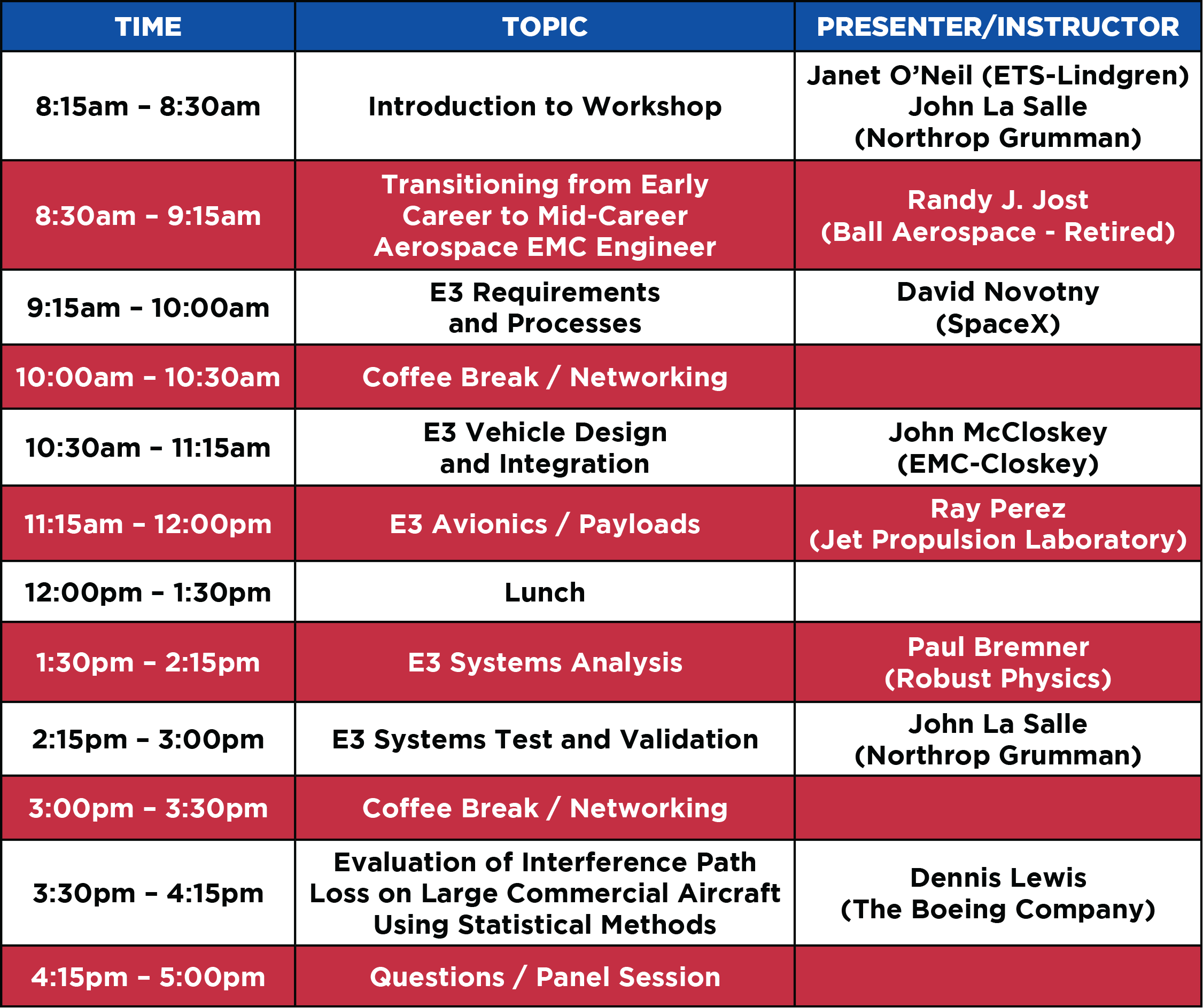
MEET OUR SPEAKERS
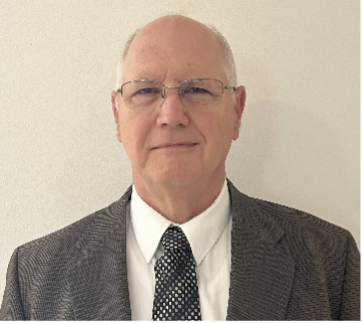
Transitioning from Early Career to Mid-Career Aerospace EMC Engineer
Randy J. Jost
IEEE Life Senior Member, Ball Aerospace (Retired), Adjunct Professor at Utah State University
ABSTRACT
When entering the workforce, most engineers are rightfully focused on doing a good job and making a positive impression on their employer. And yet, to have a successful career in engineering, it is best to be aware of the distinct phases of an engineering career and how to prepare for them. This is especially important for Aerospace EMC engineers, as it is both a specialty area as well as an area that requires increasing breadth and depth as one moves forward in the field. This presentation will cover the important considerations of preparing for a role as a mid-career engineer, with a focus on Aerospace EMC engineering. It will discuss the phase of the engineering career, separate roles that one can take, and how to prepare for those roles. This preparation is especially important as innovative technologies and engineering approaches, such as the demand for systems with higher bandwidth and speed, and the use of AI to “replace” personnel requires a more proactive approach to career planning. Future trends will be discussed that must be considered to make your career as flexible and robust as possible to ensure career longevity, including the ability to have a working knowledge of all the various topic areas associated with Aerospace EMC and how they interact with other Aerospace engineering areas.
ABOUT RANDY J. JOST
Dr. Randy Jost received the BSEE, MSEE, and PhD in Electrical Engineering from the University of Missouri-Columbia. He served as an officer in the USAF and completed assignments at the Air Force Institute of Technology, the Air Force Research Laboratory, Air Intelligence Agency, Defense Intelligence Agency, for the JCS at the Pentagon and the Plasma Physics Laboratory and HPM offices at Kirtland Air Force Base. He retired from the Air Force as a Lieutenant Colonel in 2006. From 1991 to 1996, he worked as a Program Manager for SRI International in Rosslyn, Virginia. During this period, he also served as an IPA for the Office of the Secretary of the Air Force for two years. In 1996, he took a position as the Technical Director/Director of Engineering for Johnson Controls, at the National RCS Test Facility through 2000. In 2001, he joined Utah State University and was an assistant professor in the Department of Electrical & Computer Engineering through 2005, and then a Senior Scientist at the Space Dynamics Laboratory at USU, where he participated in the development and implementation of electromagnetic range and materials characterization activities both in the RF and optical area. In 2011, he accepted a position at Ball Aerospace and Technologies Inc. as a Staff Consultant in RF and Microwave Engineering. In 2014, he became the Staff Consultant in electromagnetic compatibility (EMC), where he provided company-wide support in EMC/EMI technologies, provided in-house training for EMC design and testing as well as led EMC design and testing for aerospace systems. He retired from Ball Aerospace in 2021 and is currently an Adjunct Professor at USU, teaching courses in Space Engineering, EMC, Radar, and Remote Sensing.
Randy is a Life Senior Member of the IEEE and has served on the Board of Directors of the IEEE EMC Society. He is a Senior Member of the Antenna Measurement Techniques Association, where he served a term on the Board of Directors. He is also a member of AIAA, SPIE and the Association of Old Crows. He was a licensed professional Engineer in the state of Virginia, and is an iNARTE certified EMC Engineer, an iNARTE certified Spectrum Management Engineer, a licensed Commercial Radio Operator, and a Licensed Amateur Radio Operator, Extra Class (N8NAZ).
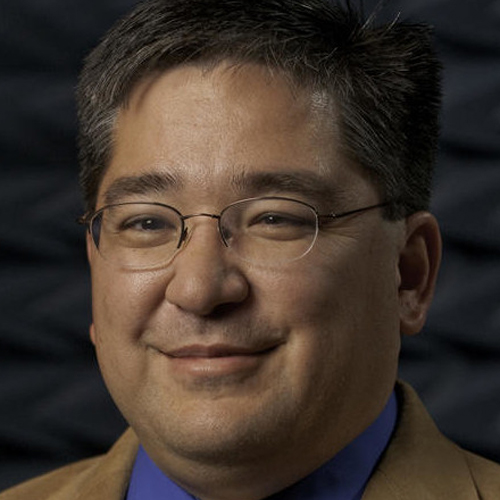
E3 Requirements and Processes
David Novotny
SpaceX
ABSTRACT
DO-160, MIL-STD 461 and CISPR/FCC have defined Electromagnetic Environmental Effects (E3) requirements for systems. After decades of experience, successes and upsets, common acceptable levels of emissions are allowed and accepted levels of disturbance must be tolerated to be “qualified for operation”. Some variation is allowed based on class of operation (consumer vs industrial), location (inside or outside a well-protected area of an aircraft), or environment (near RF emitters, exposed to lightning attachments or attached to critical operations). In all these cases, an environment was agreed upon and specified so tests can be performed to determine compliance. How are these environments defined so requirements can be determined and tests developed? What are the consequences of these requirements, like improved interoperability, lower upset risk, complexity, cost, weight, energy consumption, time spent complying with these requirements? We will explore building requirements for new projects, weighing historical precedents, and designing new tests for new environments now being explored.
ABOUT
David Novotny received his BS and MS in Electrical Engineering from the University of Colorado at Boulder. He has worked in Electromagnetics for 30 years, designing low perturbing EM probes, RF measurement systems, robotic antenna ranges, standards development and task specific EM studies in propagation/shielding, system vulnerabilities/hardening, and accurate EM environment analysis for human and operational safety. Since 2020, David has been a Principal Electromagnetic Effects Engineer at SpaceX, supporting Falcon, Dragon, Starlink, and Starship programs. Prior to SpaceX, David worked as a researcher in the Electromagnetics Division at the National Institute of Standards and Technology where he designed Antenna Calibration systems, performed field, RF and power calibrations, measured shielding and propagation into and within spacecraft and aircraft, and tested RFID systems for electronic enabled documents.
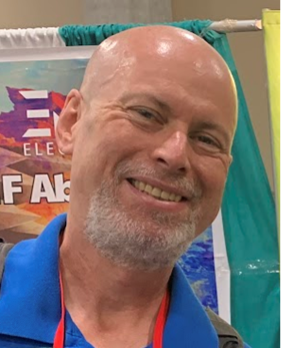
E3 Vehicle Design and Integration
John McCloskey
EMC-Closkey, NASA (Retired)
ABSTRACT
On spacecraft platforms, full end-to-end EMC verification is not feasible at the fully integrated system level. This may be due to such factors as size (availability of chamber of sufficient size and cleanliness at spacecraft vendor facility), schedule (time and logistics to transport observatory to another facility), and operating temperature of key components (e.g., infra-red camera systems operating at cryogenic temperatures). For these reasons, EMC verification must begin at the earliest stages of the program, starting with the design of individual components and continuing through every level of integration. This presentation illustrates this approach using NASA’s James Webb Space Telescope as an example of a highly successful implementation.
ABOUT JOHN McCLOSKEY
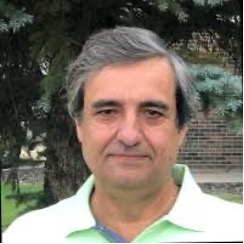
John McCloskey is the Principal Engineer at the newly formed EMC consulting and training company, “EMC-Closkey.” In June 2025, John retired from NASA’s Goddard Space Flight Center in Greenbelt, Maryland, after 36 years of service. During his time with NASA, John provided EMC support to many space flight projects, including the James Webb Space Telescope (JWST) starting in 2002 until its launch on Christmas Day of 2021. John enjoys teaching and training.
Understanding Spacecraft and Aircraft Avionics Hardware for the Development of Appropriate EMC Requirements and Testing
Reinaldo “Ray” Perez
Jet Propulsion Laboratory
ABSTRACT
What is commonly known as avionics constitutes the essence of most electronics in an aircraft and a spacecraft. A good understanding of the design and development of the different types of avionics in airborne and spaceborne vehicles provides the essence of their functionalities and how such airborne and spaceborne vehicles accomplish all their missions’ requirements. Such knowledge is also important for testing the avionics for EMC compliance. It is intended herein to provide a survey of both aircraft and spacecraft avionics electronics designs and identify the essentials of the performance requirements and parameters that need to be verified. Then, we address one of such needed requirements—compliance during EMC testing. What and where to test and what to measure in EMC testing is important. Though appropriate EMC testing guidelines and processes will be discussed briefly, the essence in this presentation will be on what to measure and where to perform such measurements for EMC in an avionics box.
ABOUT REINALDO “RAY” PEREZ
Ray Perez received a BS and MS in Physics from the University of Florida and the PhD in Electrical Engineering from Florida Atlantic University. Additionally, he received an MS in Professional Management and an MBA from the University of Miami. He has worked for NASA, IBM, Lockheed Martin Space Systems Company and recently retired from the Jet Propulsion Laboratory (JPL), California Institute of Technology, after 37 years of working for JPL’s Mission Assurance Organizations in the design and development of spacecraft avionics hardware for earth orbiting and interplanetary missions. In his pursuit of personal interests and endeavors, Ray also gained considerable experience through many years with aircraft avionics of commercial aircraft.

E3 Systems Analysis
Paul Bremner
Robust Physics
ABSTRACT
The topic E3 Systems Analysis will address simulation to support System-level EMC engineering, as defined in MIL-STD-464. At the early design stage, it is assumed that all equipment item and subsystem suppliers will test qualify their components for conducted emissions and susceptibility (CE, CS) and for radiated emissions and susceptibility (RE, RS) according to MIL-STD-461 or equivalent.
System-level analysis starts by estimating all of the actual launch environments – launch pad exterior E field, launch vehicle power systems CS, RS, etc. It must then estimate all of the actual on-orbit E3 environments – exterior antenna E fields, electrostatic discharge (ESD), etc. Uncertainty in these environment levels has to be treated statistically. They are commonly defined by the program as peak and average environment levels … and may be as much as an order of magnitude different.
Next, a system-level EMC model of electric fields in all the aperture-connected interior and exterior domains is assembled, along with a statistically representative model of the main cable harnesses between units and subsystems. The E3 environments are then applied to the model – successively for launch and for on-orbit operating phases – to estimate the actual RS electric field levels in each enclosure and the actual CS terminal voltage / current loading at each as-installed equipment item (including power supply ripple, etc.). Again, given the possible variability in the operating environment levels and uncertainties in the early stage design process, these system-level (in-situ) CS and RS levels need to be defined statistically.
Where launch and/or on-orbit CS, RS levels are predicted to exceed the MIL-461 test qualification levels, the system-level model can then be used to evaluate EMC design changes to achieve electromagnetic compatibility, in one of two ways:
- Refine the design; eg. re-locate items, improve shielding of enclosures, re-route cables, improve cable / connector shielding and grounding, add RF absorbing materials
- Tailor the equipment level or subsystem-level CS and/or RS test levels in the procurement specifications
ABOUT PAUL BREMNER
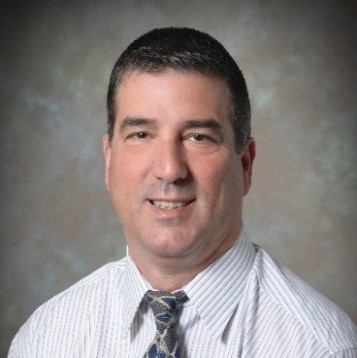
Paul Bremner has been a member of IEEE since 2010. He has a degree in mechanical engineering from Monash University in Australia. Paul has spent most of his 40+ year career working in stochastic wave mechanics – applied in both electromagnetics and vibro-acoustics.
Under NASA, DARPA, Navy and US Air Force funding, Paul has led the development of new statistical wave physics simulation technology, which is uniquely well-suited to System-level E3 assessment of aerospace platforms.
He is principal of the simulation software, research and consulting services company RobustPhysics in Del Mar, CA.
E3 Systems Test and Validation
John La Salle
Northrop Grumman
ABSTRACT
When installing any new or modified equipment on an aircraft, after EMI Qualification, the next level qualification is required. E3 System verification is required per MIL-STD-464. Depending upon the applicable platform requirements will influence which systems EMC testing will be performed. To obtain Operational Flight Clearance (OFC), system verification must be completed to verify that system E3 performance requirements are met. The EMI performance of the aircraft-installed equipment must be assessed, as well as aircraft EMC and the environment in which it operates. This presentation addresses some of the required MIL-STD-464 system test requirements for verification/validation. The overall theme is about educating the audience about system level EMC using Navy military aircraft as an example.
ABOUT JOHN LA SALLE
John La Salle is the IEEE EMC Society Immediate Past President. He has been an IEEE EMC Society member for over 28 years (since1998), President 2024-2025, President-Elect in 2023 and was the Society Treasurer from 2008 to 2022. John is a member of the EMC Board of Governors, Executive Committee, Advisory Committee, Aeronautics and Space EMC Technical Committee (TC-8) and EMC Management Committee (TC-1). He is also the co-founder of the IEEE Team EMC bike club. For his professional career, John is a Northrop Grumman Senior Technical Fellow (NGF2) for Electromagnetic Environmental Effects (E3) at the Multi-Domain Command & Control (MDC2) Division in Northrop Grumman Aeronautical Systems, a premier provider of manned and unmanned aircraft, and advanced technologies critical to our nation’s security. In this role, John brings more than 40 years of engineering excellence in electromagnetic design, integration and test in the aerospace industry. He has applied all aspects of E3 technologies to the design, integration and test of corporate products including aircraft, electrical/electronic equipment, spacecraft, space launch vehicles, shipboard radars, and ground-based radar systems. John is the POC for MDC2 and the Northrop Grumman Aeronautics Sector (AS). He grew up in Long Island, New York, and started his career at Grumman Aircraft Corporation in 1986. His current Project/Program is E-2D Hawkeye aircraft at Northrup Grumman in Melbourne, Florida.
Evaluation of Interference Path Loss on Large Commercial Aircraft Using Statistical Method
Dennis Lewis
The Boeing Company
ABSTRACT
As more airlines around the world are installing passenger communication systems that enable the use of passenger-owned intentionally transmitting portable electronic devices (T-PEDs) there is a requirement from an airplane safety perspective to ensure electromagnetic compatibility between the T-PEDs and the airplane communication, navigation, and surveillance (CNS) systems. An FAA advisory special committee, SC-202, was convened to produce an industry accepted method for measuring the interference path loss (IPL), which is the coupling between a transmitter onboard the airplane and the airplane CNS antennas. Full scale airplane testing was undertaken to compare traditional deterministic test methods to a new statistical test approach. This presentation outlines a novel method for determining the IPL for each CNS system that utilizes a statistical approach to finding the upper bound coupling with known confidence levels.
ABOUT DENNIS LEWIS
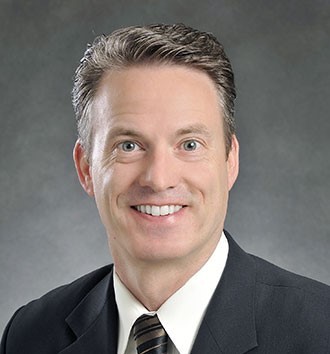
Dennis Lewis received his BS Electrical Engineering degree with honors from Henry Cogswell College and his MS degree in Physics from the University of Washington. He has worked at Boeing for 36 years and is recognized as a Technical Fellow. He currently has leadership and technical responsibility for the RF, Microwave, and Antenna test capabilities. Dennis holds 12 patents and is the recipient of the 2013 and 2015 Boeing Special Invention Award. He is a Senior Member of the IEEE and several of its technical societies including the Microwave Theory and Technologies Society (MTT-S), the Antennas and Propagation Society (AP-S) and the Electromagnetic Compatibility Society (EMC-S). He actively contributes to these societies as a member of the IEEE MTT-S TC-3 on microwave measurements and as a current Board Member, past Distinguished Lecturer and 2019 International Symposium chair for the IEEE EMC Society. He is an Ed Gillespie Fellow, Distinguished Speaker and served on the Board of Directors for the Antenna Measurements Techniques Association (AMTA) and chaired its annual symposium in 2012 and 2023. Dennis is a part-time faculty member teaching a course on Measurement Science at North Seattle College. He is also an active member and past chairman of the Technical Advisory Committee where he mentors engineering students. His current technical interests include aerospace applications of reverberation chamber test techniques as well as microwave/antenna measurement systems and uncertainties.